Myopia Management Program

Is your child's eyesight getting worse every year?

Stronger glasses every year isn't inevitable. There are treatments that can slow it down — and Dr. Anderson specializes in them.

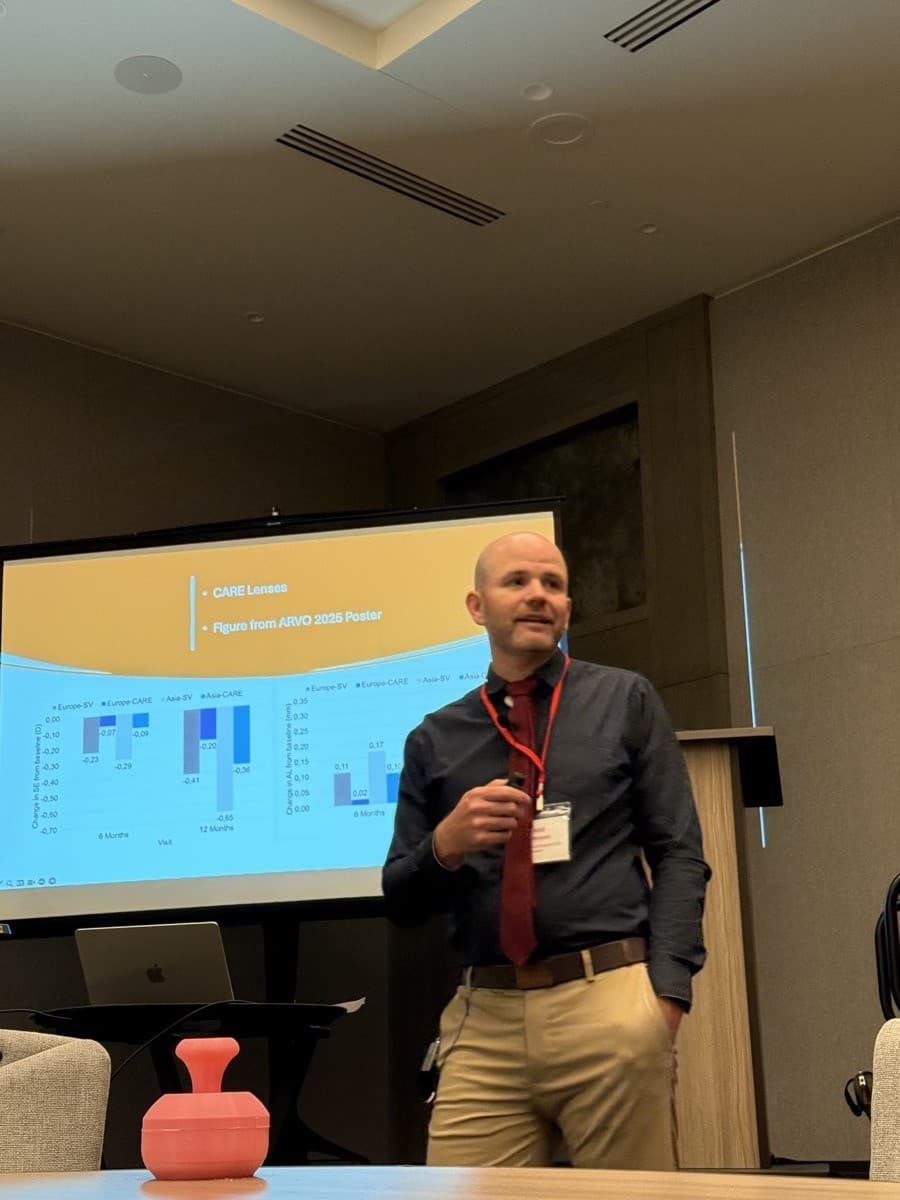
Dr. Anderson teaching at the Utah Optometry Annual Meeting
The Problem

Myopia is getting worse in kids. Faster than ever.

More screen time, less outdoor time, and genetics are driving a global increase in childhood myopia. In Utah, we're seeing kids whose prescriptions jump every six months.

The risk isn't just thicker glasses. High myopia significantly increases the lifetime risk of retinal detachment, glaucoma, and macular degeneration. These aren't distant concerns — they're the reason we don't just prescribe stronger lenses and send families home.

We don't want to scare you. We want to give you options.

Our Approach

We don't just correct your child's vision. We work to slow the progression.

At Blinc, myopia management isn't a side offering — it's a core specialty. Dr. Anderson evaluates each child individually and recommends a treatment plan based on their age, prescription trajectory, and lifestyle.

Treatment options

Three proven approaches.

Each works on the eye in a different way. Here’s the plain-language version.

Ortho-K

Reshapes the cornea overnight.

A custom lens applies gentle pressure while your child sleeps, temporarily flattening the steep front of the eye. In the morning, light focuses correctly on the retina — all day, no lenses.

1Put the lens in at bedtime
2Sleep — the shape slowly corrects
3Remove in the morning, see clearly
Best for
Active kids who don’t want to wear glasses or contacts during the day. Ages 6+.
MiSight

Refocuses light on the retina.

A soft daily contact with concentric rings that correct vision in the center and send a “slow-growth” signal to the peripheral retina — the part that drives myopia progression.

1Pop a fresh lens in each morning
2Wear through the day
3Toss at night — no cleaning
Best for
Kids who are comfortable with contacts. Good for sports and active lifestyles.
Low-Dose Atropine

Tells the eye to stop stretching.

A low-dose drop interacts with receptors in the eye that regulate growth. It doesn’t sharpen vision directly — it slows the eye’s elongation, which is what makes myopia worsen.

1One drop per eye at bedtime
2No lenses, no fuss
3Can be combined with Ortho-K or MiSight
Best for
Younger children, or as a complement to Ortho-K or MiSight for faster progressors.
A day in the life

Each works at a different time of day.

One of the most common questions from parents: “Wait — when does my kid actually wear these?” Here’s how the day looks for each.

Ortho-K
Worn overnight
~8 hours while sleeping
12am6am12pm6pm12am
MiSight
Worn during the day
At least 10 hours during waking hours
12am6am12pm6pm12am
Low-Dose Atropine
One drop at bedtime
A single drop — takes seconds
12am6am12pm6pm12am

Atropine can be layered on top of Ortho-K or MiSight for faster progressors — Dr. Anderson builds the plan around your family’s day.

Start with a 30-minute consultation.

Dr. Anderson will assess your child's current prescription, measure eye length, review progression history, and recommend a personalized treatment plan. This is a dedicated appointment — separate from a routine exam.

Book a Myopia Consultation
Common Questions

At what age should we start?

The earlier the better. Myopia management is most effective when started before the prescription climbs too high. We see kids as young as 6 for evaluation.

Is Ortho-K safe for kids?

Yes. Ortho-K has decades of clinical data behind it. The lenses are custom-fitted to your child's eyes and the process is closely monitored. Dr. Anderson will walk you through care and hygiene.

Does insurance cover myopia management?

Most standard vision plans do not cover myopia management treatments. We offer payment plans and accept HSA/FSA. We'll go over costs during the consultation so there are no surprises.

How long does treatment last?

Myopia management is ongoing — typically through the teenage years when the eyes are still growing. Most families see significant slowing within the first 6–12 months.

What results can we expect?

Clinical studies show 50–60% slowing of myopia progression with Ortho-K and MiSight. Results vary by child, but most families see a meaningful change within the first year.

The earlier you start, the more you can slow.

30-minute consultation. No obligation. Just answers.